
Featured























RNA Analytics has released a new end-to-end demonstration of AutoSure, its digital platform for managing motor insurance claims from first accident report through to a closed, paid case.
AutoSure by RNA Analytics is a cloud-native Motor Claims SaaS platform designed to digitize and automate the entire vehicle insurance claims process from accident registration to final settlement.
Authored by John Bowers, Head of Actuarial Product and Consulting at RNA Analytics
The implementation of Principle-Based Reserving (PBR) under Valuation Manual 22 (VM-22) represents a transformative shift for life insurers managing non-variable annuity products, including Fixed Annuities, Fixed Indexed Annuities, and Payout Annuities.
We’re delighted to welcome Larry Atkins FSA as Sales Executive, where he will focus on expanding R3S across the U.S. market.
The R3S AI BBM Agent constructs models within the R3S Modeler, based on specification using LLMs and a standard code library. This model is completely transparent and explainable within R3S Modeler.
Global actuarial software provider RNA Analytics has announced the release of its specialized R3S US Standard Code VM-22 Module, designed specifically for US life and annuity carriers to modernize Principle-Based Reserving (PBR) compliance for non-variable annuity portfolios including Fixed, Fixed Indexed, and Payout Annuities.
Global actuarial software provider RNA Analytics has unveiled a new overview of its R3S RiskPlatform, detailing how the solution transforms the Own Risk and Solvency Assessment (ORSA) from a burdensome, reactive compliance exercise into a dynamic C-suite decision engine.
On July 23, 2026, James Kang, CEO of AiNOS, visited RNA Analytics' headquarters in Seoul to sign a strategic Memorandum of Understanding (MOU) with Harry Kim, CEO of RNA Analytics.
Authored by Jihyun Kim, Global Sales Executive RNA Analytics
Enterprise-Perspective Pricing
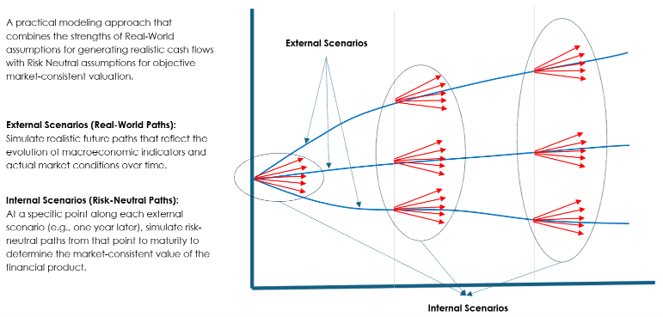
Through the previous two articles, we introduced the need for a distributable-earnings metric that can represent the shareholder perspective — rather than the CSM metric alone — when pricing insurance products, and the Nested Scenario modeling methodology that can implement an appropriate projection of distributable earnings under the current IFRS 17/K-ICS regime.
Authored by Jihyun Kim, Global Sales Executive RNA Analytics
In the previous instalment, we discussed the problems of examining only the CSM metric when pricing insurance products, and the need for a shareholder-profit-perspective pricing metric. We noted that the concept of traditional VNB is useful as a way to evaluate distributable earnings — a shareholder-profit concept — but that it cannot be used as is and must be improved to fit the requirements of the current regime.
Hosted by Herald Biz
We are honoured to announce that RNA Analytics has been recognized with the award in the Insurance Solution category at the 2026 Korea’s Most Respected Companies, Institutions, Leaders & Consumers’ Favourite Brand Awards.
PowerKorea magazine feature
Actuarial science has a 200-year history; and it's finally getting a modern, AI-driven revolution.
Insurance has always been an incredibly data-intensive business, requiring companies to model decades of complex variables, from interest rates to long-term liabilities. But with global standards like IFRS 17 and evolving risk regulations, legacy systems are struggling to keep pace with the complexity.
Authored by Jihyun Kim, Global Sales Executive RNA Analytics
In 2023, IFRS 17 was fully introduced. Changes to the accounting regime inevitably affects corporate decision-making. Following the adoption of IFRS 17, insurers came to emphasize the CSM metric, and this influenced pricing as well, with insurers adopting the new-business CSM margin as a metric for pricing decisions.
Authored by Jihyun Kim, Global Sales Executive RNA Analytics
If an insurance company were compared to a car, insurance-product pricing would be its engine — for the driving force behind an insurer’s growth originates from its products.
R3S GIP simplifies sophisticated predictive analytics, allowing users to perform detailed pricing analysis with ease. Driven by continuous innovation, the platform bridges the gap between raw data and actionable underwriting decisions through a streamlined, user-friendly interface.
Authored by Sunil Yoon, Principal Actuarial Consultant RNA Analytics
As the field of Data Science continues to develop rapidly, many companies are showing increasing interest in modeling using Machine Learning or Deep Learning and are applying these technologies in their actual business operations.
Our CEO Harry KIM, joined Seoul Economic Network TV for the filming of “Jo Young-gu’s Hot Trend” in Seoul.
Authored by Angie Edmunds, Senior Actuarial Consultant, RNA Analytics
The non-life insurance industry is dealing with growing reporting demands, increasing data volumes, and more complex actuarial processes than ever before.
In the non-life insurance sector, volatility is part of the business. From catastrophe exposure to evolving claims development across motor, property, and specialty lines, insurers are under increasing pressure to deliver faster insights, stronger governance, and more agile regulatory reporting.
We are delighted to welcome Jihyun Kim to RNA Analytics Limited as Business Head, AP.
With more than 20 years of experience in the insurance industry, Jihyun brings deep expertise across actuarial, financial analysis, business planning, risk and capital management, product development and marketing.
Authored by Manuel Montes Senior Actuarial Consultant, RNA Analytics
Did you know that with the Profiler functionality in R3S Modeler, you can precisely identify which components and variables consume the most time during your model's execution?
In an era defined by volatile global markets and unpredictable operational shifts, the traditional approach to risk management is rapidly becoming obsolete. Organizations can no longer rely on legacy systems to anticipate the challenges of tomorrow.
Authored by Tak Lee, GC Regional Manager, RNA Analytics
In the evolving landscape of insurance regulation, the Own Risk and Solvency Assessment (ORSA) has transitioned from a mere compliance exercise to a critical pillar of risk management strategic decision-making.
Compliance with IFRS 17 may for some time have seemed like a distant (and moving!) target on the horizon, but now that the accounting standard is upon us, work to implement the new rules and models has come to fruition for many insurers, giving us the opportunity to dissect projects end-to-end, and to share best practice.
The shift to VM-22 represents the most significant change to U.S. annuity reserving in decades. By moving away from the prescriptive, formulaic CARVM approach, the new Principle-Based Reserving (PBR) framework requires insurers to model complex, stochastic future states.
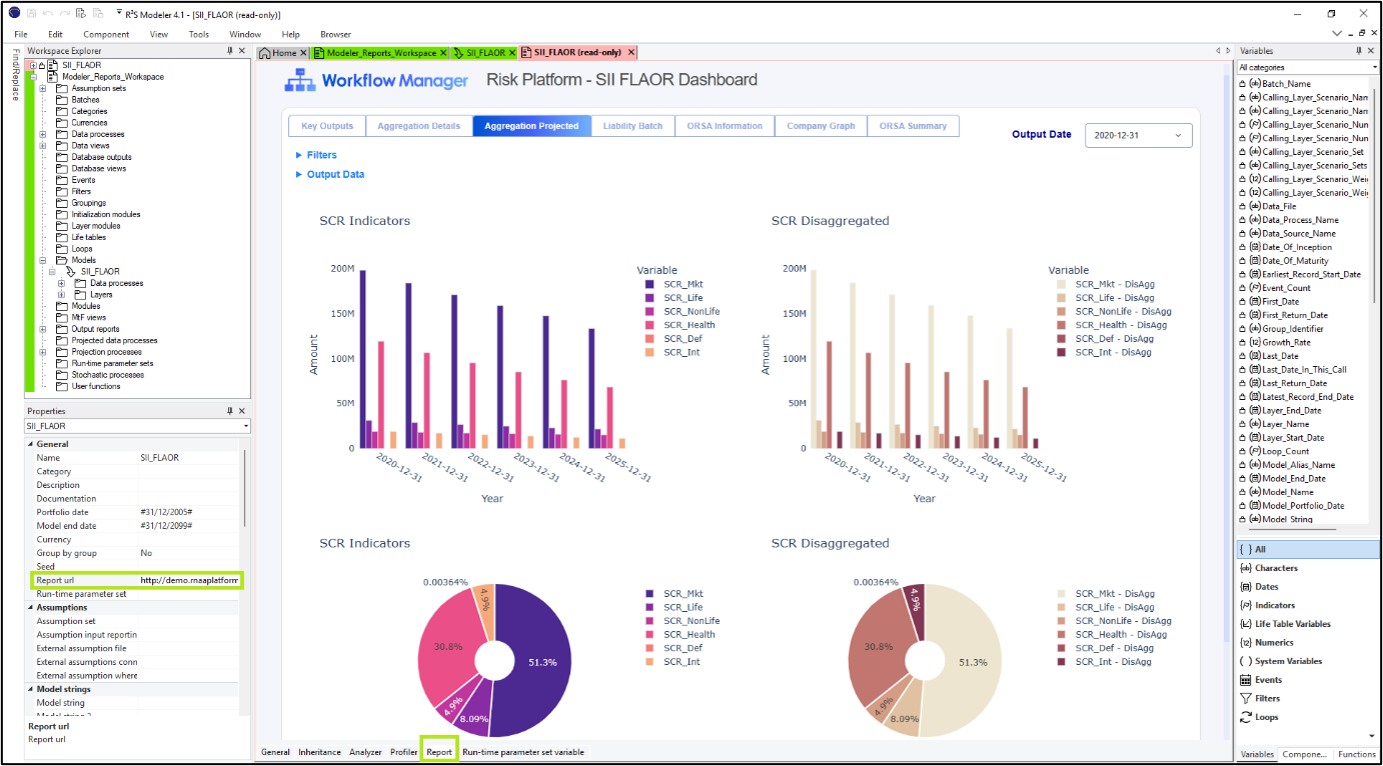
¿Sabías que puedes integrar tus reportes web directamente en R3S Modeler?
Disponible desde la versión 4.1, R3S Modeler incorpora una funcionalidad poco conocida pero que puede aportar un gran valor añadido a los equipos actuariales y de riesgos: la pestaña Report, disponible en el workspace de resultados tras la ejecución de un modelo.
RNA Analytics, a global leader in actuarial and risk management software, is pleased to announce its official Gold Sponsorship of the Instituto de Actuarios Españoles (IAE) for 2026.
¿Sabías que R3S Modeler 5.0 ya está disponible?
La nueva versión de R3S Modeler, nuestra solución para el diseño de modelos actuariales, ya está disponible e incorpora importantes mejoras orientadas a ofrecer una plataforma más potente, flexible y preparada para responder a las necesidades actuales de los equipos actuariales y técnicos.